What Lake Havasu's Nearly 19-Grain-Per-Gallon Water Does to Commercial Equipment Every Single Day
What Lake Havasu's Nearly 19-Grain-Per-Gallon Water Does to Commercial Equipment Every Single Day
Lake Havasu City businesses run on water. Hotels fight spots on glassware. Restaurants battle scale in dishmachines. Manufacturing lines protect boilers, cooling towers, and process water skids. The problem is simple and relentless. Lake Havasu’s municipal supply, sourced from the Colorado River, averages nearly 19 grains per gallon of hardness and high total dissolved solids. Every unprotected cycle leaves calcium and magnesium on heat-transfer surfaces and inside valves, nozzles, and lines. That is why commercial facilities across 86403, 86404, and 86406 that delay treatment see measurable efficiency loss within months, not years.
Plumbing by Jake serves Mohave County from its Kingman base at 3270 Kino Ave #1 in 86409 and sees the full range of outcomes. Kingman’s 20 to 30+ grains per gallon hardness is among the most severe in Arizona. Lake Havasu’s nearly 19-grain water is close behind and just as punishing on commercial equipment. In both markets, the difference between treated and untreated water shows up on utility bills, detergent spend, linen replacement, and emergency repair tickets. For local owners who search for commercial water treatment and softener installation Lake Havasu AZ, the goal is not a gadget. The goal is uptime, lower costs, and documented compliance under Arizona’s regulatory framework.
Why this matters for hotels, restaurants, and industrial facilities around London Bridge
Hard water does two things that hurt a business. It reduces heat transfer efficiency by laying down scale and it increases maintenance labor by clogging and scarring internal surfaces. A single millimeter of scale on a boiler tube or inside a tankless heat exchanger https://az-hvac-plumbing.s3.us.cloud-object-storage.appdomain.cloud/lake-havasu/why-lake-havasu-city-businesses-destroy-equipment-faster-than-anywhere-else-in-mohave-county.html can cut efficiency by 10 percent or more. In kitchens, scale turns a fast dishmachine into a chronic headache with heater faults and streaked glassware. In cooling towers, mineral deposits and drifting pH drive blowdown up and chemical costs along with it.
Lake Havasu’s high TDS load compounds the problem. TDS stands for total dissolved solids. It is the sum of minerals and salts in the water. High TDS drives spotting and fouling even after softening, which is why many hospitality properties combine a commercial water softener with a reverse osmosis skid for spot-free rinsing. On the maintenance side, untreated hardness forms rock-like deposits in solenoid valves, pump heads, and heater elements. Those parts are not disposable in a busy season. They are hours out of service and bookings at risk.
Local regulatory context that Lake Havasu operators cannot ignore
Arizona adopts the 2018 International Plumbing Code with state amendments. The Arizona Department of Environmental Quality regulates commercial pre-treatment and discharge, with 2026 compliance deadlines touching food service and manufacturing across Mohave County. For hotels along McCulloch Boulevard, resorts near the London Bridge district, industrial shops along the Lake Havasu Avenue corridor, and back-of-house laundries serving the lakefront, this means two practical steps. First, softening and filtration must prove they protect fixtures and equipment while aligning with brine discharge expectations. Second, systems that contact potable water must use NSF/ANSI 61 compliant components and controls that provide verifiable records for inspectors.
Plumbing by Jake configures twin-alternating commercial softeners to meet continuous service needs and pairs them, when needed, with brine reclamation that cuts salt usage by as much as 40 percent compared to older time-clock systems. For restaurants and breweries, documented pre-treatment protects expensive dishmachines and brewing vessels and provides the audit trail ADEQ wants to see. For manufacturing facilities up the road in Kingman Industrial Park, south of Kingman Airport, the same documentation streamlines internal audits and insurer requirements.
What nearly 19 grains per gallon does inside commercial equipment
Heat is the trigger. Any time water is heated, dissolved hardness drops out as a solid. The first layer forms fast and is thin. The second layer bonds to the first and is harder. After that, deposits thicken exponentially. In a hotel laundry boiler, scale makes the burner work longer to hit the same setpoint. In a high-temp dishmachine, heater elements collect crust that insulates the element from the water, which forces higher amperage and shortens element life. In a tankless water heater feeding banquet kitchens or a locker room, the copper or stainless steel heat exchanger chokes in months without protection or descaling.
On the mechanical side, hardness attacks flow control. Metering orifices lose diameter. Spray nozzles in pre-rinse stations distort. Solenoid valves stop sealing. When TDS is high, spotting shows up on fixtures even with softening, because softeners remove hardness ions, not the whole dissolved load. That is why many Lake Havasu dining rooms add a commercial reverse osmosis membrane and a storage tank to produce low-TDS water for final rinse and beverage service. Reverse osmosis membranes need pre-filtration and softening upstream to avoid rapid fouling. When paired correctly, the chain works: sediment and carbon filter, softener, then RO.
Commercial softening that matches Lake Havasu’s duty cycle
A single-tank softener can keep up for a home. A hotel or restaurant needs uninterrupted soft water 24 hours a day, especially during peak season. A twin-alternating softener solves this. It has two resin tanks. One tank treats water. The other stays in standby. When the active tank reaches capacity, the control valve switches service to the standby tank and regenerates the exhausted tank immediately. There is no downtime. Flow and pressure stay stable. This matters in kitchens where a dip in pressure can interrupt fill cycles and in laundries where wash times are timed to the minute.
Resin bed selection is not guesswork. Ion exchange resin is the plastic bead bed inside a softener that swaps hardness for sodium. In Lake Havasu’s high-hardness profile, cross-linked high-capacity resin is standard, and media protectors such as gravel under-beds and top screens prevent channeling. Control valves must handle industrial flow rates without pressure loss. High-flow control valves from commercial platforms paired with brine reclamation reduce salt usage and comply with discharge targets. Plumbing by Jake also sizes brine tanks to match regeneration frequency so operators do not get caught short during a busy weekend.
Reverse osmosis for spot-free rinsing and specialty process water
Soft water alone will not stop spots on glassware in a high-TDS market. A commercial reverse osmosis system pushes water through a semi-permeable membrane. The membrane rejects most dissolved solids. The result is low-TDS water that dries without spots. For restaurants along the London Bridge and catering operations on the Island District, this ends the endless towel-polishing cycle and resets dishwasher results. For manufacturing shops, RO allows consistent process water quality. Conductivity monitoring tracks TDS in real time and triggers membrane flushes and pre-filter changes as needed.
RO membranes last when the upstream is right. Sediment and carbon filters remove particles and chlorine, which degrades membranes. A softener upstream stops scale from forming on the membrane face. Storage tanks and delivery pumps provide stable flow to end uses. Plumbing by Jake ties these systems into ADEQ-friendly drain points with air gaps and backflow preventers so potable and non-potable lines remain separated by code.
Cooling towers, boilers, and tankless heaters under Lake Havasu load
Cooling towers operate by evaporating water to carry heat away. As water evaporates, minerals do not. They concentrate. Conductivity rises. Without softening and a tuned chemical program, scale cements onto fill and heat exchangers. Blowdown frequency increases. Water and chemical costs rise. In Lake Havasu’s nearly 19-grain baseline, a softened makeup line reduces scale potential and allows a higher cycles-of-concentration target before blowdown.
Boilers thrive on low-hardness water. Even a thin layer of scale on tubes or plates acts like insulation. Fuel use climbs. Steam quality drops. With twin-alternating softeners and proper pretreatment, a plant can reach performance that extends tube life and reduces acid cleanings. Tankless heaters are the canary in this mine. On untreated water in Mohave County, tankless heat exchangers scale out in 18 to 36 months. Many business owners see that timeline get even shorter under heavy service. With softening and scheduled descaling, tankless units support 15 to 20 year lives. Those are real dollars saved in kitchens, gyms, and employee locker rooms.
Documented ROI that Lake Havasu operators can verify line by line
In Mohave County, the numbers pencil out. Most hotels and restaurants that install commercial softening report detergent cuts near 50 percent. Linen life improves because fibers are not abraded by mineral crystals in the wash. Boiler service intervals lengthen. Dishmachines stop burning elements and thermostat probes. A common benchmark is an 18-month return on investment for a properly sized twin-alternating softener with basic pre-filtration. Facilities with RO for spot-free rinsing often see faster returns due to reduced rewash and lower glassware replacement.
There is also a risk cost that declines. Emergency after-hours repairs on a scaled heater or jammed solenoid valve can ruin a weekend service. With tuned commercial water treatment and softener installation Lake Havasu AZ businesses can push those incidents way down. That is measurable in guest satisfaction and in payroll hours redirected to customers instead of crisis cleanup.
Code, compliance, and component choices that pass inspection
Plumbing by Jake builds commercial systems to the Arizona Plumbing Code framework. The state adopts the 2018 IPC. Every potable-contact part is NSF/ANSI 61 compliant. Assemblies include backflow preventers sized to flow and pressure. Air gaps are present where drains accept RO concentrate or softener brine. For ADEQ pre-treatment under the 2026 standards, system controls provide usage logs and regeneration records. That documentation layer is why many sites switch from time-clock softeners to metered demand-initiated regeneration control valves with data output.
Salt usage is the scrutiny point in some discharge permits. Brine reclamation recovers a portion of the brine from each cycle and reuses it, cutting salt loads while keeping resin capacity intact. Upflow regeneration strategies can also cut salt per cycle in the correct flow profile. Plumbing by Jake tests onsite hardness, reviews hourly demand patterns, and sizes resin capacity to avoid short-cycle regenerations that waste salt and water. The target is simple. Deliver soft water at the tap with the least salt and water use that still protects the equipment.
Lessons from Kingman and Bullhead City that apply in Lake Havasu
Kingman sits at 3,330 feet with groundwater hardness from the Hualapai Valley basin at 20 to 30+ grains per gallon. That water destroys unprotected tankless heaters in under three years and chews up boiler tubes. Bullhead City on the Colorado River shows similar high TDS with heavy scaling in kitchens along the 86442 corridor. Lake Havasu has a similar profile. Facilities that run twin-alternating softeners, pre-filtration, and RO for spot-free rinsing report stable operations season after season. Across Downtown Kingman, White Cliffs, the Andy Devine Avenue corridor along Historic Route 66, and the Kingman Industrial Park, the pattern is consistent. Soften the makeup, filter intelligently, and scale-induced failures decline.
Shareable local data point
The fastest visible improvement after a commercial water softener install in Lake Havasu kitchens is often in the dishroom. Many sites see rinse heater amperage drop immediately and wash cycle times stabilize within the first week. In hotels that add RO for glassware along the London Bridge corridor, towel-polishing time drops to near zero. This is the same pattern documented in Kingman, where ground hardness reaches 30+ grains per gallon. There, anode rod consumption in water heaters typically runs 2 to 4 years versus 6 to 8 years in moderate water markets, and tankless heat exchangers scale out in 18 to 36 months without annual descaling. Lake Havasu’s nearly 19 grains per gallon pushes similar failure curves without treatment.
How Plumbing by Jake engineers commercial water systems for Lake Havasu
Commercial water treatment starts with measurement. Technicians test grains per gallon, TDS, iron if present, and chlorine residual. They gather hourly and daily demand data. They map out critical loads: boilers, cooling towers, dishmachines, laundry, beverage lines, and process skids. From there, the specification follows the loads. Many Lake Havasu facilities land on a chain that looks like this: multi-media sediment filtration for particulates, carbon filtration for chlorine and organics, twin-alternating commercial softener for hardness removal, and reverse osmosis for low-TDS spot-free service or process water. Controls include high-flow valves, demand-initiated regeneration, conductivity monitoring, and remote alerting where downtime risk is highest.
Components matter. Kinetico and Culligan commercial platforms are common references in this market. Watts pressure regulators and backflow preventers protect distribution. Storage tanks are sized to ride through peak hour demand. Ion exchange resin choice is matched to Lake Havasu hardness and flow rate so capacity arrives without over-regeneration. Where wastewater discharge constraints exist, brine reclamation and salt-efficient regeneration strategies lower throughput without sacrificing soft water quality.
Maintenance that keeps systems at spec
Even the best equipment drifts when left alone. Brine concentration must match the control valve’s regeneration targets. Injectors can clog. Carbon and sediment filters need changes on schedule to protect resin and membranes. RO membranes need periodic flushes. Conductivity sensors need calibration. Plumbing by Jake builds maintenance calendars around the Lake Havasu business cycle. Busy weekends on the water mean filters are serviced ahead of demand. Regeneration setpoints are tightened before high-occupancy months. This is not extra effort. It is how a business keeps the efficiency gains it paid for.
Edge cases and special loads in Mohave County
Some process lines need low-silica water because silica spotting survives softening and traditional RO under certain conditions. In those cases, Plumbing by Jake specifies RO membranes with silica performance or adds mixed-bed deionization for the final polish. Breweries in both Kingman and Lake Havasu sometimes target blended TDS for flavor profiles. Blending valves with precise conductivity control deliver that water reproducibly. Cooling towers sometimes benefit from softened makeup paired with a chemical plan tuned to reduced calcium load. Every site has a wrinkle. The team sees those patterns across Mohave County and resolves them to code.
Why equipment brand alignment matters
Commercial systems live or die on parts availability and serviceability. A hotel in 86404 that runs out of soft water during a full weekend cannot wait a week for a proprietary valve insert. Plumbing by Jake uses platforms with local parts access and ties them into standard plumbing components. Where tankless units support gym or locker room service, brands like Navien, Noritz, and Rinnai are supported across Mohave County. For domestic hot water storage, Bradford White, A.O. Smith, and Rheem have proven track records. In some hotel retrofits, a hybrid heat pump water heater reduces electrical load on backup systems. When that upgrade meets federal Section 25C criteria, owners can claim up to $2,000 in tax credit per the IRA Energy Efficient Home Improvement Credit. That is not the main driver in a commercial setting, but properties with residentially-metered dwelling units can benefit in mixed-use scenarios.
What owners will notice first after installation
After a week, dishrooms report faster rinse cycles and fewer heater faults. After a month, laundry rooms see smoother fill times and reduced detergent use. After a quarter, boilers and tankless units hold setpoints without needing cleanings. After a season, glassware and fixtures show fewer spots. After a year, maintenance logs show fewer emergency calls tied to scale jams or heater trips. The long arc is even more compelling. Twin-alternating softeners extend the life of $80,000 boiler and cooling tower assets by years and reduce chemical and water costs by allowing optimized cycles of concentration. For process-driven shops along Lake Havasu Avenue and the industrial zones at the north end of town, that stability equals capacity maintained in peak months.
Coordinating with property managers and multi-site owners
National property managers and regional restaurant groups need consistency. Plumbing by Jake documents setpoints, salt and water consumption, and service intervals so a location in Lake Havasu City can be measured against a sister site in Bullhead City or Kingman. That is how multiple kitchens cut detergent use in half and prove it to accounting. That is how a manufacturing site near Kingman Regional Medical Center verifies conductivity targets against process specs. The same team that lines a clay sewer lateral with a Perma-Liner CIPP system in Downtown Kingman brings that field discipline to water treatment installation and service.
What can go wrong if the system is undersized
Too-small resin beds regenerate constantly. That wastes salt and water and lets hardness bleed through during peak demand. Undersized control valves choke pressure and slow equipment fill cycles. RO skids sized for off-peak demand run tanks dry during service and fall behind. In Lake Havasu’s hospitality market, that looks like dishmachines stacking up dirty racks and rooms held out of service. Plumbing by Jake sizes systems based on hardness, TDS, peak-hour gallons per minute, and daily throughput. That is the difference between a system that works on paper and a system that works on Saturday night.
Why facilities across Mohave County call a Kingman-based team
Local knowledge matters when hardness and TDS shape outcomes. A team rooted in Kingman sees how 20 to 30+ grains per gallon behaves in real equipment and how Lake Havasu’s nearly 19 grains per gallon tracks in kitchens and boiler rooms. That context is important in monsoon months when makeup water needs shift and during winter when overnight lows dip enough to threaten uninsulated runs in older structures north of the lake. The same technicians who run Ridgid SeeSnake video camera inspections on main lines, hydro jetting at 4,000 PSI for grease and mineral scale, and trenchless Perma-Liner lining for sewer laterals also install and maintain commercial softeners, reverse osmosis systems, and filtration arrays that stand up to Mohave County use.
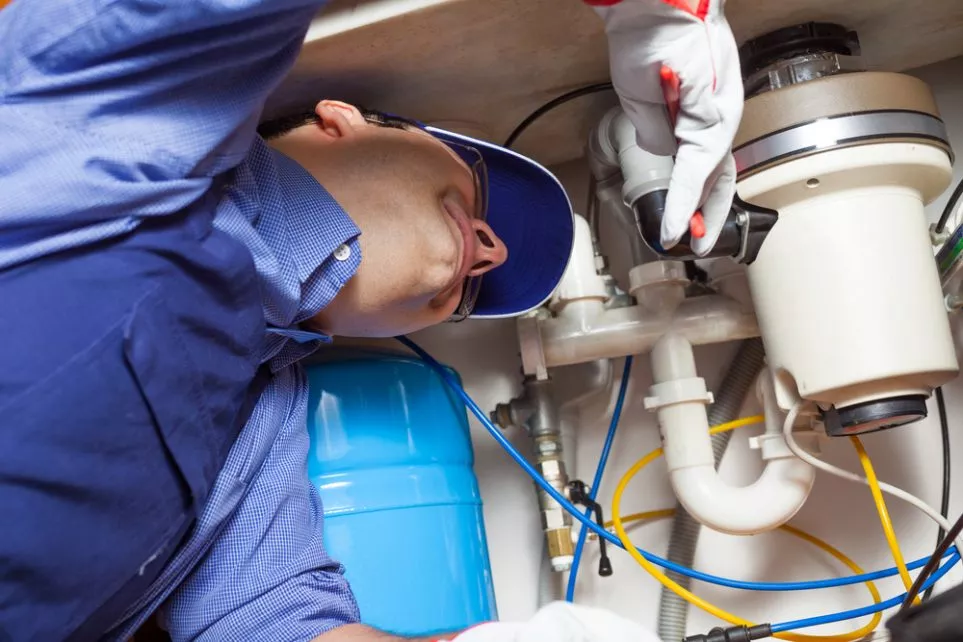
For searches that start with commercial water treatment and softener installation Lake Havasu AZ
Businesses that type commercial water treatment and softener installation Lake Havasu AZ into a search bar are usually facing one of three conditions. Equipment is scaling and failing. Guests or customers are complaining about spots and service delays. Or an inspection clock is ticking toward 2026 ADEQ pre-treatment compliance. Those searches are not theory. They are calls for a fix that will last. They lead to conversations about twin-alternating softeners, reverse osmosis for low-TDS service, brine reclamation to manage salt, NSF/ANSI 61 component selection, and data logs that survive audits.
The answer is not the same for every property. A boutique hotel on McCulloch Boulevard has different loads than a marina-adjacent café near Site Six or a fabrication shop that runs a small boiler for process heat. What stays constant is the baseline. Nearly 19 grains per gallon is not gentle. It will put scale on every heat surface it touches and cost dollars daily until it is treated.
Service across Lake Havasu City, Kingman, Bullhead City, and Mohave County
Plumbing by Jake covers Lake Havasu City’s 86403, 86404, and 86406, Kingman’s 86401, 86402, 86409, and 86413, and the Bullhead City 86442 corridor and beyond. The team moves between the London Bridge district, North Lake Havasu, South Lake Havasu, the Hualapai Mountain Road corridor, the Andy Devine Avenue stretch of Historic Route 66, Valle Vista, Golden Valley, and Kingman Industrial Park. The technicians see how caliche soils around Kingman stress buried lines during monsoon saturation and how high summer temperatures in Lake Havasu drive heavy water and energy loads. That field time shows up in better specifications and cleaner installations.
What commercial owners gain with a Mohave County-focused installer
An installation that fits real water chemistry and demand. A maintenance plan that anticipates peak season. A parts platform supported in-region. A documentation set that satisfies ADEQ. And a local number to call when a setting needs to be changed or a filter replaced before a weekend event. That is why so many restaurants and hotels that start a search for commercial water treatment and softener installation Lake Havasu AZ end up with a system that stays quiet for years.
Straight talk on cost and payback
Commercial softeners and RO systems are capital investments. The question is always the same. How long until it pays for itself. In Lake Havasu kitchens and laundries, detergent spend, element replacements, rewash labor, and glassware losses drop so quickly that owners often see investment return in about 18 months. Facilities that protect boilers and cooling towers push that even faster when they factor in energy savings and extended service intervals. Add brine reclamation and demand-initiated regeneration and salt use drops far below older systems, which helps both cost and compliance. Those numbers are specific to a site. Plumbing by Jake runs the math based on measured hardness and real usage so owners can make a call with eyes open.
Answering the questions that define a successful install
Every Lake Havasu property has a few key questions to settle before ordering equipment. What is the true peak-hour flow and how does it stack across loads. How will soft water be routed to boilers, tankless heaters, dishmachines, and laundry while leaving bypasses where hardness is acceptable. Where will RO tanks and commercial water treatment and softener installation Lake Havasu AZ pumps sit to avoid long dead legs. What backflow and air gap configuration will pass inspection. How will service access be staged so filter changes take minutes, not hours. These are not abstract questions. They are the difference between a system that just sits in a room and one that pays its way every day.
Commercial water treatment and softener installation Lake Havasu AZ that holds up
Owners who value uptime ask for proof. They want to see a twin-alternating softener with a meter head that logs flow, regeneration cycles, and salt draw. They want a commercial RO with conductivity display and alarm. They want resin spec sheets and NSF/ANSI 61 certification for potable parts. They want regeneration settings and maintenance intervals in writing. Plumbing by Jake delivers those details and ties them to a service schedule that matches the Lake Havasu operating calendar. That is how a system installed this spring runs quiet through a Fourth of July rush and keeps doing its job the following year.
Final word for Mohave County owners comparing bids
Price matters. But Lake Havasu’s nearly 19-grain water will expose undersized and under-specified systems quickly. A single-tank softener that goes offline to regenerate in the middle of dinner service costs more in one busy night than a twin-alternating upgrade costs across its life. An RO skid without proper pre-filtration will foul and burn membranes. A system without brine reclamation or demand-initiated regeneration will waste salt and invite discharge trouble. Good engineering is cheaper than constant firefighting. That is the lesson from 20 to 30+ grain water in Kingman and the same pattern shows in Lake Havasu kitchens and boiler rooms every month.
Ready to protect equipment and cut operating costs
Plumbing by Jake is Arizona ROC licensed under ROC #296317 for commercial and residential work, bonded, and insured. The team installs, services, and documents systems that meet ADEQ expectations and the 2018 IPC. For commercial water treatment and softener installation Lake Havasu AZ businesses can schedule a site assessment, hardness and TDS testing, and a written proposal with upfront flat-rate pricing. Same-day and after-hours availability is in place when a kitchen or boiler room is down. 24/7 emergency dispatch covers Lake Havasu City, Kingman, Bullhead City, Fort Mohave, Golden Valley, and the broader Mohave County area. The company backs every installation with a 100 percent satisfaction guarantee and a show up on time guarantee. To book an assessment or request service for commercial water treatment and softener installation Lake Havasu AZ, call (928) 615-8228.
For owners comparing options for commercial water treatment and softener installation Lake Havasu AZ, the fastest way to move forward is a hardness and usage profile done onsite. That reveals the resin capacity, valve size, and RO configuration that will hold up through peak season. When that system is in and tuned, the daily grind of nearly 19 grains per gallon turns from a constant cost into a solved problem. For Mohave County businesses that have felt the pain of scale and spots, that change is immediate and obvious. Call now to start that process and get commercial water treatment and softener installation Lake Havasu AZ handled by a team that lives with these water numbers every day.
Plumbing by Jake
Professional Plumbing Services